
Chronic Spontaneous Urticaria Clinical Trials Update 2026: Phase-Wise Pipeline Status, Drug Profiles, and Key Developers | Allakos, AstraZeneca, Biosana, Celldex Therapeutics, Celltrion, Eli Lilly
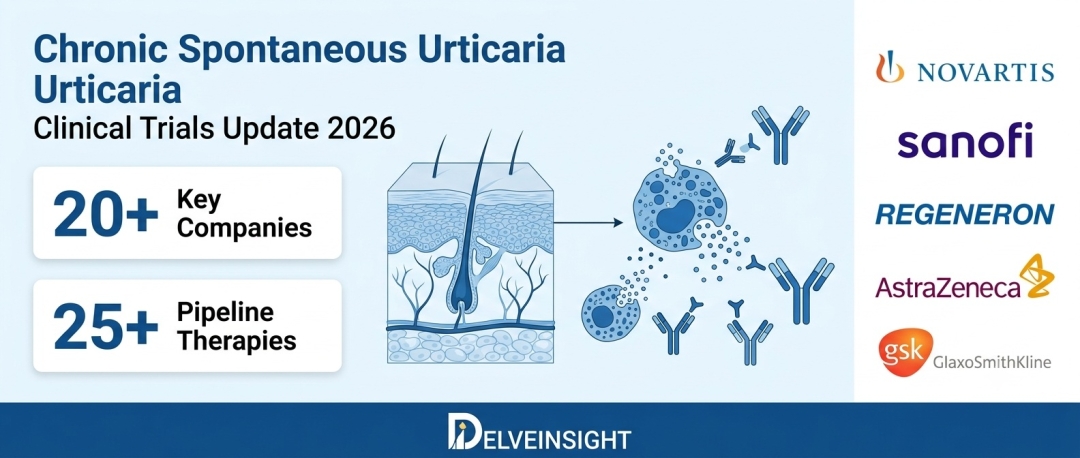
“Chronic Spontaneous Urticaria Pipeline Insight, 2026“ report by DelveInsight outlines comprehensive insights into the present clinical development scenario and growth prospects across the Chronic Spontaneous Urticaria Market.
The Chronic Spontaneous Urticaria Pipeline report embraces in-depth commercial and clinical assessment of the pipeline products from the pre-clinical developmental phase to the marketed phase. The report also covers a detailed description of the drug, including the mechanism of action of the drug, clinical studies, NDA approvals (if any), and product development activities comprising the technology, collaborations, mergers acquisition, funding, designations, and other product-related details.
Some of the key takeaways from the Chronic Spontaneous Urticaria Pipeline Report:
-
Companies across the globe are diligently working toward developing novel Chronic Spontaneous Urticaria treatment therapies with a considerable amount of success over the years.
-
Chronic Spontaneous Urticaria companies working in the treatment market are Allakos, AstraZeneca, Biosana, Celldex Therapeutics, Celltrion, Eli Lilly and Company, Genentech, GI Innovation/Yuhan, Regeneron, GlaxoSmithKline, Taiho Pharma, Glenmark Pharmaceuticals, Gossamer Bio, Kiniksa Pharmaceuticals, Mycenax Biotech, Novartis, Regeneron, Synermore Biologics, UCB Biopharma, United BioPharma, and others, are developing therapies for the Chronic Spontaneous Urticaria treatment
-
Emerging Chronic Spontaneous Urticaria therapies in the different phases of clinical trials are- Ligelizumab, Remibrutinib (LOU064), Tezepelumab, CDX-0159, GI-301, Dupilumab (DUPIXENT), UB-221, MTPS9579A, Lirentelimab (AK002), TAS5315, rilzabrutinib, GDC-0853, AZD1981, Desloratadine, and others are expected to have a significant impact on the Chronic Spontaneous Urticaria market in the coming years.
-
In October 2026, A Phase III clinical trial evaluating CMAB007 against Xolair (omalizumab) in patients with chronic spontaneous urticaria was listed as completed on October 2, 2026. The study represents a development milestone for a potential biosimilar treatment option. Completion of a clinical trial does not, by itself, establish regulatory approval or confirm that the treatment met its efficacy endpoints.
-
In October 2026, Novartis initiated a Phase III study on September 21, 2026, to evaluate a treatment algorithm combining remibrutinib and omalizumab in adults with CSU inadequately controlled by second-generation H1 antihistamines. The recruiting study plans to enroll 382 participants and assess disease control over 24 weeks. The trial may help inform treatment sequencing for patients who do not respond adequately to antihistamines alone.
-
In September 2026, Celldex Therapeutics announced positive topline results from its two Phase III trials evaluating barzolvolimab in patients whose CSU symptoms remained inadequately controlled with H1 antihistamines. Both studies met their primary and key secondary endpoints at Week 12, with benefits also reported in patients with severe disease and those who had not responded adequately to omalizumab. The trials will continue through 52 weeks, and the company anticipates submitting a biologics license application (BLA) in 2027.
-
In September 2026, A Phase II clinical study evaluating the investigational antibody MG-K10 in patients with chronic spontaneous urticaria (CSU) was registered on September 24, 2026. This trial introduces another potential biologic treatment approach in the CSU pipeline as researchers investigate new options for patients with persistent symptoms. Additional clinical data on the therapy’s safety and efficacy will be necessary to establish its potential role in treatment.
-
In April 2026, The FDA approved Dupixent for children aged 2–11 years with chronic spontaneous urticaria (CSU) whose symptoms persist despite H1 antihistamine treatment. This decision expanded its existing indication for adults and adolescents aged 12 years and older, establishing Dupixent as the first biologic therapy approved in the United States for young children with inadequately controlled CSU. The approval was supported by the LIBERTY-CUPID clinical trial program, including pharmacokinetic data from the Phase III CUPIDKids study.
-
In January 2026, Jasper Therapeutics reported updated results from the Phase Ib/IIa BEACON study and its open-label extension showing that briquilimab delivered sustained disease control in CSU. Additional patients achieved complete responses and marked reductions in UAS7 scores at 12 weeks.
-
In November 2025, the European Commission has approved DUPIXENT (dupilumab) for the treatment of moderate-to-severe CSU in adult and adolescent patients 12 years and above with inadequate response to histamine-1 antihistamines (H1AH) and who are naive to anti- immunoglobulin-E (IgE) therapy for CSU. Eligible patients can use DUPIXENT as a first-line targeted treatment option.
-
In September 2025, Novartis announced that Rhapsido® (remibrutinib) has been approved by the U.S. Food and Drug Administration (FDA) as an oral therapy for adults with chronic spontaneous urticaria (CSU) who continue to experience symptoms despite treatment with H1 antihistamines. The medication is taken twice daily in pill form and eliminates the need for injections or routine lab monitoring. It is the first FDA-approved Bruton’s tyrosine kinase inhibitor (BTKi) for CSU, working by targeting BTK to reduce the release of histamine and other proinflammatory mediators, thereby offering a novel treatment approach.
-
In July 2025, Jasper Therapeutics, Inc. (Nasdaq: JSPR), a clinical-stage biotech developing briquilimab, a novel KIT (CD117)–targeting antibody therapy for mast cell–driven diseases such as chronic spontaneous urticaria (CSU) and chronic inducible urticaria (CIndU), has shared updated data from its BEACON Phase 1b/2a study of subcutaneous briquilimab in adults with CSU, along with a program update. Treatment with briquilimab in the 240mg and 360mg single-dose cohorts achieved rapid and deep disease control, with 8 of 9 participants (89%) attaining a complete response and 7 of 9 (78%) showing clinical response by week 2. Participants rolling over into the open-label extension at 180mg Q8W demonstrated strong efficacy, with 8 of 11 (73%) achieving a complete response by 12 weeks.
-
In March 2025, Results from the Phase III REMIX-1 (NCT05030311) and REMIX-2 (NCT05032157) trials demonstrate that remibrutinib effectively alleviates symptoms of chronic spontaneous urticaria (CSU) in patients who do not respond to second-generation H1-antihistamines. The studies, published in The New England Journal of Medicine, showed that the drug has a rapid onset of action, with efficacy maintained for 24 weeks, and a favorable safety profile.
-
In April 2025, Sanofi and Regeneron’s Dupixent (dupilumab) has received approval from the U.S. Food and Drug Administration (FDA) for the treatment of chronic spontaneous urticaria (CSU).
-
In January 2025, Jasper Therapeutics, Inc. (Nasdaq: JSPR), a clinical-stage biotechnology company developing briquilimab, a novel c-Kit (CD117) targeting antibody for mast cell-driven diseases like chronic spontaneous urticaria (CSU), chronic inducible urticaria (CIndU), and asthma, has announced positive preliminary data from its ongoing BEACON Phase 1b/2a study of subcutaneous briquilimab in adults with CSU. The study reported significant reductions in UAS7 scores, with an average change of -26.6 at eight weeks in the 240mg single-dose cohort. Multiple dosing regimens at or above 120mg showed reductions of over -25 points. Clinical responses were observed within a week, and patients across all dose levels (80mg, 120mg, 180mg, and 240mg) achieved Complete Responses (UAS7 = 0), with all participants in the 240mg single-dose group maintaining their response through eight weeks. The treatment demonstrated dose-dependent durability, reductions in serum tryptase, and a favorable safety profile.
Chronic Spontaneous Urticaria Overview
Chronic spontaneous urticaria (CSU), also known as chronic idiopathic urticaria, is a persistent skin condition characterized by the recurrent appearance of hives (urticaria). These hives are red, raised, itchy welts or wheals that develop suddenly on the skin. When these hives occur for six weeks or more without any specific identifiable cause, it is termed as chronic.
Get a Free Sample PDF Report to know more about Chronic Spontaneous Urticaria Pipeline Therapeutic Assessment-
https://www.delveinsight.com/report-store/chronic-spontaneous-urticaria-pipeline-insight
Emerging Chronic Spontaneous Urticaria Drugs Under Different Phases of Clinical Development Include:
-
Ligelizumab: Novartis
-
Remibrutinib (LOU064): Novartis
-
Tezepelumab: Amgen
-
CDX-0159: Celldex Therapeutics
-
GI-301: GI Innovation
-
Dupilumab (DUPIXENT): Sanofi/ Regeneron
-
UB-221: United BioPharma
-
MTPS9579A: Genentech
-
Lirentelimab (AK002): Allakos Inc.
-
TAS5315: Taiho Pharma
-
rilzabrutinib: Sanofi
-
GDC-0853: Genentech, Inc.
-
AZD1981: AstraZeneca
-
Desloratadine: Organon and Co
Chronic Spontaneous Urticaria Route of Administration
Chronic Spontaneous Urticaria pipeline report provides the therapeutic assessment of the pipeline drugs by the Route of Administration. Products have been categorized under various ROAs, such as
-
Intravenous
-
Subcutaneous
-
Oral
-
Intramuscular
Chronic Spontaneous Urticaria Molecule Type
Chronic Spontaneous Urticaria Products have been categorized under various Molecule types, such as
-
Monoclonal antibody
-
Small molecule
-
Peptide
Chronic Spontaneous Urticaria Pipeline Therapeutics Assessment
-
Chronic Spontaneous Urticaria Assessment by Product Type
-
Chronic Spontaneous Urticaria By Stage and Product Type
-
Chronic Spontaneous Urticaria Assessment by Route of Administration
-
Chronic Spontaneous Urticaria By Stage and Route of Administration
-
Chronic Spontaneous Urticaria Assessment by Molecule Type
-
Chronic Spontaneous Urticaria by Stage and Molecule Type
DelveInsight’s Chronic Spontaneous Urticaria Report covers around 25+ products under different phases of clinical development like
-
Late-stage products (Phase III)
-
Mid-stage products (Phase II)
-
Early-stage product (Phase I)
-
Pre-clinical and Discovery stage candidates
-
Discontinued & Inactive candidates
-
Route of Administration
Further Chronic Spontaneous Urticaria product details are provided in the report. Download the Chronic Spontaneous Urticaria pipeline report to learn more about the emerging Chronic Spontaneous Urticaria therapies
Some of the key companies in the Chronic Spontaneous Urticaria Therapeutics Market include:
Key companies developing therapies for Chronic Spontaneous Urticaria are – GlaxoSmithKline, Allakos, Eli Lilly and Company, Roche, Novartis, Sanofi Pharmaceutical, Genentech, AstraZeneca, Kiniksa Pharmaceuticals, Ltd, United BioPharma, and others.
Chronic Spontaneous Urticaria Pipeline Analysis:
The Chronic Spontaneous Urticaria pipeline report provides insights into
-
The report provides detailed insights about companies that are developing therapies for the treatment of Chronic Spontaneous Urticaria with aggregate therapies developed by each company for the same.
-
It accesses the Different therapeutic candidates segmented into early-stage, mid-stage, and late-stage of development for Chronic Spontaneous Urticaria Treatment.
-
Chronic Spontaneous Urticaria key companies are involved in targeted therapeutics development with respective active and inactive (dormant or discontinued) projects.
-
Chronic Spontaneous Urticaria Drugs under development based on the stage of development, route of administration, target receptor, monotherapy or combination therapy, a different mechanism of action, and molecular type.
-
Detailed analysis of collaborations (company-company collaborations and company-academia collaborations), licensing agreement and financing details for future advancement of the Chronic Spontaneous Urticaria market.
The report is built using data and information traced from the researcher’s proprietary databases, company/university websites, clinical trial registries, conferences, SEC filings, investor presentations, and featured press releases from company/university websites and industry-specific third-party sources, etc.
Download Sample PDF Report to know more about Chronic Spontaneous Urticaria drugs and therapies
Chronic Spontaneous Urticaria Pipeline Market Drivers
-
Increasing prevalence of Chronic Spontaneous Urticaria, development of Novel Treatments are some of the important factors that are fueling the Chronic Spontaneous Urticaria Market.
Chronic Spontaneous Urticaria Pipeline Market Barriers
-
However, difficulty in identifying the condition, lack of awareness about the treatment and other factors are creating obstacles in the Chronic Spontaneous Urticaria Market growth.
Scope of Chronic Spontaneous Urticaria Pipeline Drug Insight
-
Coverage: Global
-
Key Chronic Spontaneous Urticaria Companies: Allakos, AstraZeneca, Biosana, Celldex Therapeutics, Celltrion, Eli Lilly and Company, Genentech, GI Innovation/Yuhan, Regeneron, GlaxoSmithKline, Taiho Pharma, Glenmark Pharmaceuticals, Gossamer Bio, Kiniksa Pharmaceuticals, Mycenax Biotech, Novartis, Regeneron, Synermore Biologics, UCB Biopharma, United BioPharmas, and others
-
Key Chronic Spontaneous Urticaria Therapies: Ligelizumab, Remibrutinib (LOU064), Tezepelumab, CDX-0159, GI-301, Dupilumab (DUPIXENT), UB-221, MTPS9579A, Lirentelimab (AK002), TAS5315, rilzabrutinib, GDC-0853, AZD1981, Desloratadine, and others
-
Chronic Spontaneous Urticaria Therapeutic Assessment: Chronic Spontaneous Urticaria current marketed and Chronic Spontaneous Urticaria emerging therapies
-
Chronic Spontaneous Urticaria Market Dynamics: Chronic Spontaneous Urticaria market drivers and Chronic Spontaneous Urticaria market barriers
Request for Sample PDF Report for Chronic Spontaneous Urticaria Pipeline Assessment and clinical trials
Table of Contents
1. Chronic Spontaneous Urticaria Report Introduction
2. Chronic Spontaneous Urticaria Executive Summary
3. Chronic Spontaneous Urticaria Overview
4. Chronic Spontaneous Urticaria- Analytical Perspective In-depth Commercial Assessment
5. Chronic Spontaneous Urticaria Pipeline Therapeutics
6. Chronic Spontaneous Urticaria Late Stage Products (Phase II/III)
7. Chronic Spontaneous Urticaria Mid Stage Products (Phase II)
8. Chronic Spontaneous Urticaria Early Stage Products (Phase I)
9. Chronic Spontaneous Urticaria Preclinical Stage Products
10. Chronic Spontaneous Urticaria Therapeutics Assessment
11. Chronic Spontaneous Urticaria Inactive Products
12. Company-University Collaborations (Licensing/Partnering) Analysis
13. Chronic Spontaneous Urticaria Key Companies
14. Chronic Spontaneous Urticaria Key Products
15. Chronic Spontaneous Urticaria Unmet Needs
16 . Chronic Spontaneous Urticaria Market Drivers and Barriers
17. Chronic Spontaneous Urticaria Future Perspectives and Conclusion
18. Chronic Spontaneous Urticaria Analyst Views
19. Appendix
20. About DelveInsight
About DelveInsight
DelveInsight is a leading Business Consultant and Market Research firm focused exclusively on life sciences. It supports Pharma companies by providing comprehensive end-to-end solutions to improve their performance. It also offers Healthcare Consulting Services, which benefits in market analysis to accelerate business growth and overcome challenges with a practical approach.
Media Contact
Company Name: DelveInsight
Contact Person: Gaurav Bora
Email: Send Email
Phone: +14699457679
Address:304 S. Jones Blvd #2432
City: Las Vegas
State: NV 89107
Country: United States
Website: https://www.delveinsight.com/consulting/due-diligence-services


